
Writer John Brunton is our guide to Malaysia’s vibrant capital and the coastal city that’s a perfect base from which to discover this country’s extraordinary wildlife

Sign Up for Preferred travel’s free newsletter
Vivid Storytelling and Exquisite Stays for the Passionate Traveler
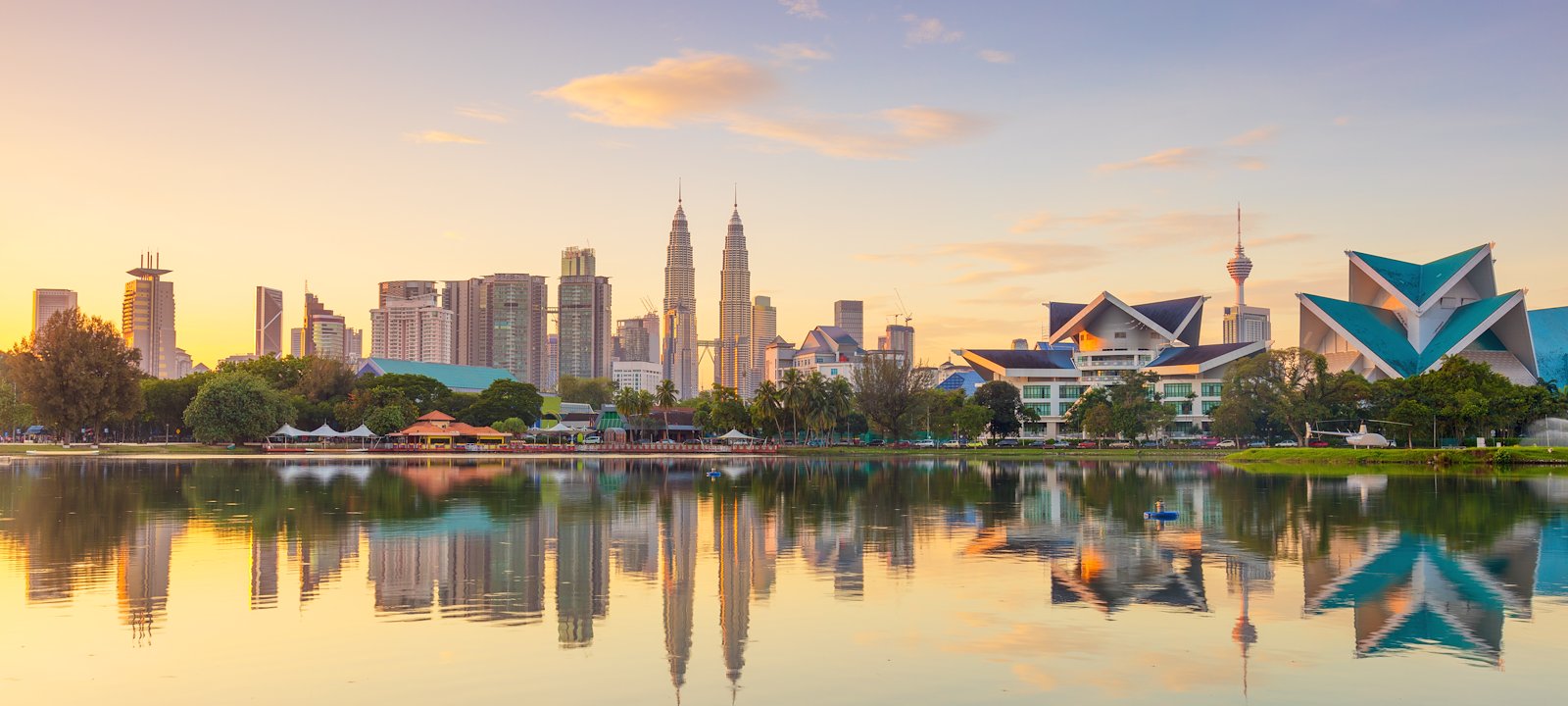
Kuala Lumpur's iconic twin Petronas Towers are instantly recognizable in the capital city's skyline.
Image credit: ShutterstockMalaysians proudly call their country “the heart of Southeast Asia,” and now is the perfect moment to discover this surprising, under-the-radar destination that offers a kaleidoscope of exotic travel opportunities. Often overshadowed by its two more well-known neighbors – Thailand to the north and Singapore to the south – trips across Malaysia can range from lazy sunbathing on a blissful sandy beach to jungle trekking in one of the world’s oldest rainforests.
Culture and history lovers can head to Penang or Malacca, both recognized by UNESCO World Heritage, while across the South China Sea, adventure awaits on the island of Borneo, diving into the shimmering turquoise waters of marine parks or observing protected wildlife like orangutans and hornbills in their entrancing tropical habitat.
The gateway to all this is the nation’s capital, Kuala Lumpur, and rather than continuing straightaway on a connecting flight, take a few days to dive into this electric, cosmopolitan city and discover Asia’s most exciting foodie scene and to-die-for luxury shopping while exploring Malaysia’s fascinating colonial and multi-ethnic heritage.

Malaysia’s Dazzling Capital City
First impressions on driving from the airport into KL, as everyone calls Kuala Lumpur, is a vibrant metropolis of soaring skyscrapers and futuristic elevated monorail trains. But there is a genuine insider’s city waiting to be discovered for those who scratch beneath the superficial surface. Head straight for where the city first grew up in the 1850s, the heritage Chinatown. A short walking tour (go in the early morning or late afternoon to avoid the humid heat) takes you past ancient Chinese temples like Sin Sze Si Ya, where the air is thick with pungent incense smoke, the psychedelic Hindu Sri Maha Mariamman Temple, decorated with brightly colored statues of mythical gods, and swirling Moorish minarets of the romantic riverside Jamek mosque.
Chinatown is experiencing a renaissance right now, with fashionable vegetarian diners, craft beer bars, and hip design boutiques, symbolized by REXKL, a nostalgic 1950s cinema that has been perfectly preserved and transformed into a thriving arts and culture hub. For a reminder of Malaysia’s colonial past, carry on to Dataran Merdeka (Independence Square), bordered by the Mughul-style red-and-white brick law courts topped with copper onion domes, and the grand half-timbered Royal Selangor Club, once the favorite haunt of British planters, and still nostalgically referred to as The Spotted Dog.
KL also boasts the amazing Bird Park, a wild jungle enclave right in the city center that has been transformed into one of the world’s largest free-flight aviaries. Stretching over 20 netted acres of lush tropical vegetation, the park is home to some 3,000 exotic birds, from multicolored parrots to preening pheasants and pink flamingos. Make sure to open a smartphone account with Grab, the local version of Uber, always quick to arrive and inexpensive – and the easiest way to get around town.
Unique and Flavorsome Cuisine
Visitors quickly learn that the favorite occupation and topic of conversation in KL is eating out. The city is a genuine 24-hour food lovers’ paradise, spanning pulsating street stalls showcasing delicious dishes from the nation’s unique ethnic mixture of Malay, Chinese, and Indian alongside sophisticated, innovative fine dining that even boasts its own Michelin Guide.
To taste the best street food, guidebooks invariably recommend the scores of stalls lining Jalan Alor, but a better destination is Chinatown’s Jalan Sultan, whose pavements are invaded at dusk by hawkers that have worked here for generations. Each one specializes in a different dish: tender claypot chicken, soothing pork ribs cooked in a herbal broth, inky-black wok-fried Hokkien mee, chili clams, steamed fish with ginger. Spicy Malay cooking is a different world altogether, best sampled in the Kampung Baru neighborhood of traditional wooden village houses. Ask for directions to Noorizan Gerak 21, a colorful food court whose nasi campur self-service buffet features a feast of more than 20 irresistible dishes like ikan bakar, stingray steamed in banana leaf; daging rendang, a fiery curry of succulent slow-cooked beef; and jackfruit masak lemak, a surprising recipe mixing vegetables and fruits.
Another world awaits the gourmet traveler wanting to explore KL’s gastronomic restaurants, which offer everything from French, Italian, and Japanese cuisine to modern Malaysian. Presuming you reserve well enough in advance, a memorable experience awaits at the elegant 46th-floor dining room of Dewakan, whose two-star Michelin chef, Darren Teoh, presents a stunning 12-course tasting menu featuring unusual ingredients that are often foraged in the local jungle. For a more relaxed evening, Troika Sky Dining offers equally stunning vistas, with funky options like Fuego’s South American flavors, Mr Chew’s revisited Chinese, and reassuring Western comfort food at Brasserie Fritz, like steak-frites or beef Wellington.
The one thing you have to leave some time for in KL is shopping. Malaysians love to hang out in their favorite shopping mall, with a new one opening up every couple of months. Currently, the most popular is The Exchange TRX, five dazzling high-tech floors of haute-couture boutiques, showrooms, and restaurants. But for a genuine slice of local life, don’t miss Sungei Wang Plaza (the wonderfully named River of Money), always reinventing itself, and the place to track down serious bargains while discovering fun Malaysian fashion stylists. A final shopping stop should be back in Chinatown at Central Market, a beautifully preserved Art Deco building that once housed the city’s wet market and today has been transformed into a showcase for Malaysian arts and crafts. It is the perfect spot to pick up souvenirs, and this being KL, there are invariably some tempting restaurants and bars, too.
The one thing you have to leave some time for in KL is shopping. Malaysians love to hang out in their favorite shopping mall
The Land Below the Wind
Malaysia offers a host of extraordinary getaways outside of KL, but nothing is quite as exciting as jumping on a two-hour flight to what is known as the Land Below the Wind. This is what the local Indigenous tribes call their exotic state of Sabah, nestling on the northeast coast of Borneo, an immense island divided among Malaysia, Indonesia, and the tiny but extraordinarily wealthy sultanate of Brunei.
Sabah’s bustling waterside capital, Kota Kinabalu, hugs the sandy coastline of the South China Sea, offering travelers the chance to sail over to idyllic tropical islands for coral reef scuba diving, as well as inland eco journeys through mangroves and ancient rainforest, whose wildlife includes the iconic orangutan, striking proboscis monkeys, pygmy elephants, and rare sun bears. Dominating everything are the brooding jagged peaks of Mount Kinabalu, Malaysia’s highest mountain, rising to 13,123 feet and surrounded by a splendid World Heritage Geopark, a protected biosphere with botanical gardens covered with exotic flowers including the gigantic Rafflesia, named after Sir Stamford Raffles, founder of today’s Singapore.
To get the perfect first impression of Kota Kinabalu (inevitably shortened to KK by the locals), take a relaxed stroll on the sunny boardwalk that runs along the downtown seafront lined with friendly pubs, sports bars, and outdoor restaurants cooking up a storm of everything from tapas, pizza, and fish curries to delicious beef and chicken satay sticks smothered in a spicy peanut sauce. This is the spot for some of the most spectacular sunsets, the sky bursting into a myriad of blazing reds and oranges, the horizon marked by tiny islands, the majestic City Mosque which seems to magically float in the lagoon waters that surround it, and the ever-present profile of Mount Kinabalu, often encircled by swirling mist.
KK is the perfect base for some terrific adventurous day trips, but take it easy at first by discovering the city itself, beginning at the packed Central Market, a must for any foodie. The colorful stalls are stacked with tempting fruits, vegetables, and herbs – some freshly foraged from the nearby rainforest – wild jungle garlic, mangoes, papaya, and Malaysia’s famed “king of fruits,” the durian, a delicious but acquired taste due to its unmistakable odor. Fish stalls display a cornucopia of seafood harvested from the waters surrounding KK, and your evening dinner is bound to feature local giant prawns, crabs, clams, and even oysters.
For sightseeing, KK boasts the impressive Sabah Museum, including a heritage village explaining the different native tribes that live here. But it is difficult to resist the chance to join a 20-minute motorboat trip out to the unspoilt islands and coral reefs of Tunku Abdul Rahman Marine Park for unforgettable swimming, snorkeling, and scuba. To really experience some of the world’s oldest rainforest, you need a full-day excursion, a couple of hours’ drive out of the city. Wildlife safaris explore the mangroves and wetlands surrounding the Klias River to the south, with the chance to see the instantly recognizable pot-bellied and huge-nosed proboscis monkeys and long-tailed macaques. As the sun sets, the river seems to come to life, lit up with the flickering lights of thousands of fireflies.
The one question all visitors to KK ask themselves is: should I climb Mount Kinabalu? You do not need to be a mountaineer to undertake the ascent, much of which entails climbing a path of 600 flights of steps. But bear in mind that you will need to take two days for the climb; it is compulsory to be accompanied by a certified guide and only just over 100 permissions are granted for each day, so you need to book several months in advance. One option is to take a good look on your first visit, stay overnight in one of the base camps, spoil yourself at the wellness center of nearby Poring Hot Springs, and decide whether you really want to plan a serious climb the next time.
Orangutans in the Wild
Everyone visiting Borneo hopes to see the island’s iconic orangutans, but sightings on a jungle trip are rare; the only guaranteed orangutan experience is at Sabah’s renowned Sepilok Orangutan Rehabilitation Centre. This entails a 30-minute flight from KK across to Sandakan, on the east coast of the island, and then a 40-minute drive into a pristine forest reserve.
Seeing the auburn-haired orangutans swing through trees is a very special experience, but as the center is focused on rehabilitating the primates to live again independently in the wilderness of the jungle, access for visitors is restricted to protected viewing stations. You can also stay overnight in nearby lodges, go off trekking and bird-watching, and return home having witnessed one of nature’s most beautiful mammals happy and free in its own natural habitat.
Seeing the auburn-haired orangutans swing through trees is a very special experience