
These glorious destinations will always be worth your time and attention. Treat yourself to a visit this year

Sign Up for Preferred travel’s free newsletter
Vivid Storytelling and Exquisite Stays for the Passionate Traveler
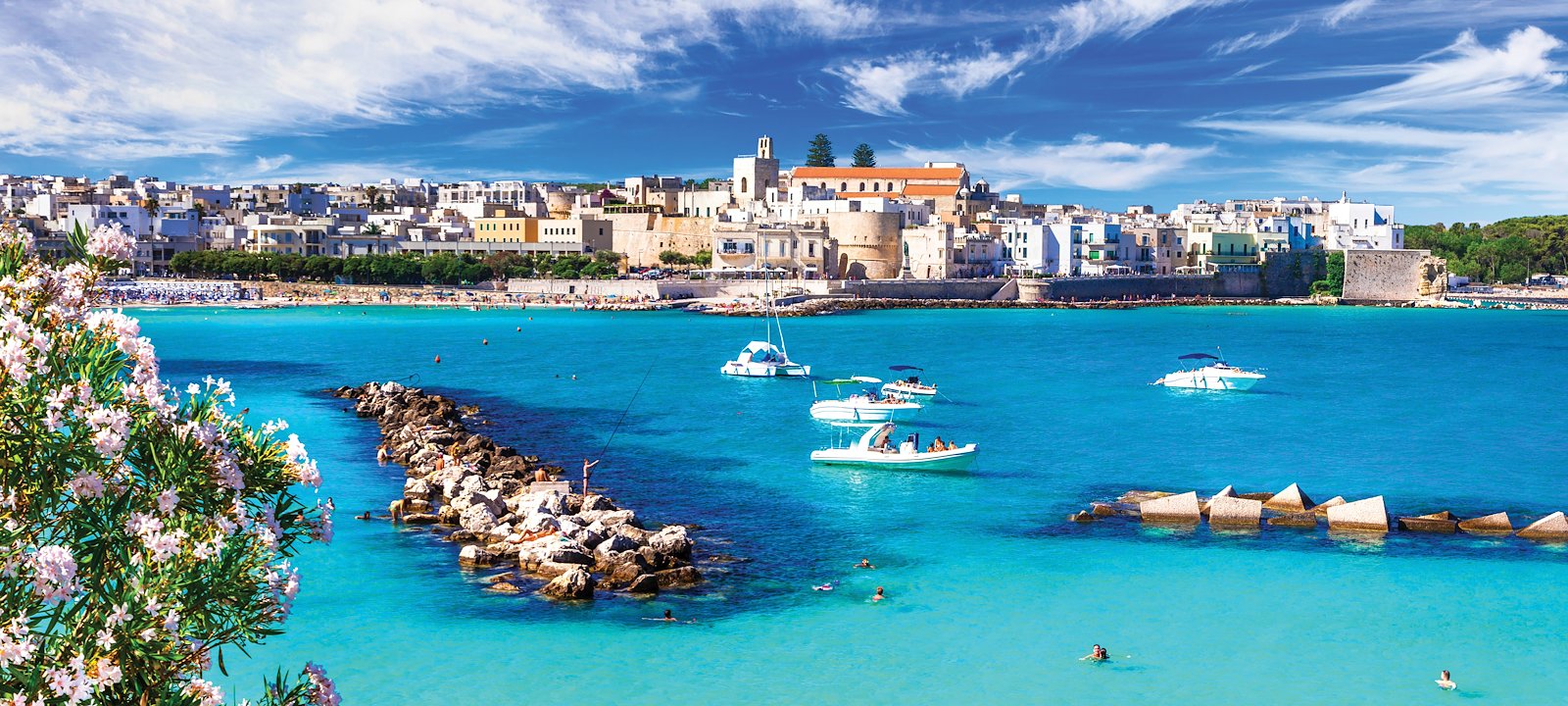
Puglia, Italy By Lee Marshall

Living well with simplicity and unhurried indulgence
Like its southern Italian neighbors Basilicata and Calabria, Puglia has refined the art of living well with passion and simplicity, and a talent for greeting visitors with the kind of unforced courtesy that simply comes naturally. At the same time, this region that over the centuries has been a melting pot of cultures – Greek, Roman, Byzantine, Norman – has an air of Mediterranean mystique that makes it stand apart.
It’s there in the trulli, those conical, beehive-like houses found only in Puglia that look like dwellings of some lost prehistoric race. It’s there in the mesmeric, trance-like rhythm of the region’s traditional pizzicata music. And it’s there in the shade of Puglia’s ancient, gnarled olive trees – at their most magnificent in the coastal plain around Savelletri, studded with ancient fortified farmhouses known as masserias that lend this seaside enclave a princely, fairy-tale air.
Close by is the hilltop town of Ostuni, a warren of whitewashed houses which seem to have grown here spontaneously and intertwined like vines. Farther south is Otranto, which has been adopted as a chichi summer resort by hip Romani and Milanesi, but still has a profoundly ancient soul – one revealed in the small and stunning Otranto Cathedral, with its magnificent 12th-century Tree of Life floor mosaic.
Here in the Salento, the heel of the Italian boot, hidden coves shelter trattorias that serve fresh sea urchins. Inland, a tableland colonized by prickly pears that nod greetings from behind ancient drystone walls turns elegantly aristocratic in Lecce, a honey-hued town of handsome Baroque palazzos that is known as “the Florence of the South.”
Farther north lies an unmissable sight that distills Puglia’s captivating otherness: Castel del Monte. Commissioned by the Holy Roman Emperor Frederick II, this octagonal castle may have been built as a hunting lodge – or it may simply have been intended as a grand geometric gesture, a celebration of man’s connection with the landscape and the universe. If your budget doesn’t stretch to building a castle, you will get the same sense of cosmic unity by stopping off at a local trattoria and ordering a plate of orecchiette with broccoli rabe, the region’s most famous contribution to the Italian pasta pantheon. Like Puglia, it’s simple, sapid, and rather delicious.
San Antonio, Texas, USA By Becca Hensley
Frontier legend meets contemporary creativity
With an undulating river at its heart, San Antonio sits in the southern part of Texas, close to the bucolic vineyards and orchards of the Hill Country. Founded as a Spanish mission more than 300 years ago, San Antonio’s well-entrenched multicultural influences – Spanish, Mexican, French, German, and more – are peppered with frontier bravado, cowboy swagger, and oil baron opulence.
It all adds up to a city enriched and fueled by its past – never homogeneous, and always authentically proud of its identity. You’ll see that in the architecture, cuisine, music, colorful mural art, festivals, and bilingual repartee. This might be the seventh most populous city in the United States, but it emanates small-town charm, with old, eclectic neighborhoods that are vibrant and welcoming.
Worth exploring are the meandering River Walk, a looping 15-mile trail along the cypress tree-lined riverbanks, and the UNESCO World Heritage Site that is home to a collection of 18th-century missions, including the Alamo.
A long-time haven for artists, the city also has plenty to offer art lovers. The bijoux McNay Art Institute displays masterworks collected by “San Antonio’s Gertrude Stein,” a Jazz Age era oil heiress and artist who built a mansion to share her massive personal trove of works by Pablo Picasso, Georgia O’Keeffe, Ernst Ludwig Kirchner, Amedeo Modigliani, Diego Rivera, Claude Monet, and many more.
Get a taste of the city’s dining scene at decades-old Tex-Mex joints (two family-owned favorites are La Fonda on Main and Mi Tierra); BBQ spots such as Smoke Shack, across from the Witte Museum; and Michelin-Starred restaurants Mixtli, Isidore, and Nicosi. And browse the bounty of local produce at the new Pullman Market in the stylish Pearl district, where a bygone brewhouse has been transformed into a vibrant cultural hub.
Copenhagen, Denmark By Lola Akinmade Åkerström
A city of heritage, design, and sustainability
History meets cutting-edge design in Copenhagen. Sustainability is second nature and local gastronomy pulses with creativity in this compact and walkable city.
Pedestrian-friendly Strøget leads you past buskers and boutiques toward iconic Nyhavn harbor docked with sailboats and pastel-colored townhouses. Beyond the Little Mermaid statue lies Kastellet, a 17th-century star-shaped fortress, while Amalienborg Palace and 19th-century Frederiks Kirke (Marble Church) anchor the royal quarter with timeless grandeur. Don’t miss Tivoli Gardens in town.
The birthplace of New Nordic cuisine, the food scene blends tradition with innovation in places like Hart Bakery, Conditori La Glace, and JUNO The Bakery aroma, while NU&DA serves traditional smørrebrød (open-faced sandwiches) piled with salmon and shrimp. Beer lovers can sip samples on a Carlsberg brewery tour.
Art and design are elegantly woven into everyday living. Handcrafted wares are available from Illums Bolighus A/S, while Georg Jensen is jeweler to the Danish Royal Family. Other shops worth checking out are Mads Nørgaard, Wood Wood, and By Malene Birger. Repurposed industrial districts house art studios such as Container Academy in Nordhavn or V1 Gallery in former meatpacking district Vesterbro. Architecture fans will love futuristic 8 House, the Black Diamond library, The Silo, and Axel Towers.
Nearing the city’s goal of CO₂-neutrality, solar-powered boats cruise the canals, wind turbines generate electricity, and restaurants serve organic, biodynamic food.