
A global tour of horse racing’s most iconic events, where tradition and theater
meet the raw power of the event

Sign Up for Preferred travel’s free newsletter
Vivid Storytelling and Exquisite Stays for the Passionate Traveler
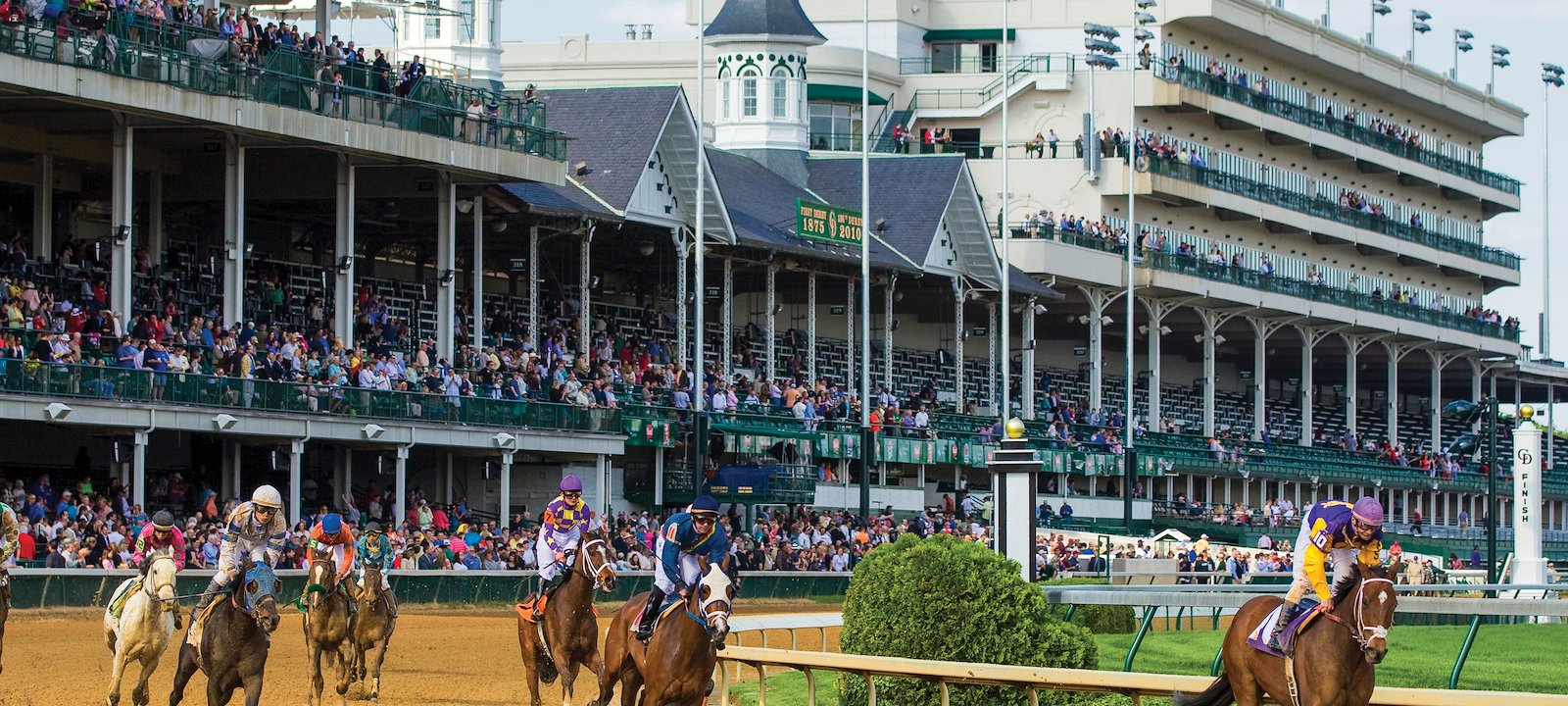
To experience the magic and derring-do of the spine-tingling presence, balletic grace, and liquid power of horse and rider, you really have to be there. Nothing quite prepares you for the moment they thunder past the rails. Horse racing makes for a grand day out; it’s one of the few elite sports where you don’t need to understand intricate rules, and crucially, you can get close enough to (almost) touch the stars.
America’s Triple Crown

As befits the oldest continuously running sports event in the United States (it began in 1875), traditions matter at the Kentucky Derby. It’s all about glamour: this is the place to see and be seen, and it’s no surprise that more than 125,000 stylish mint juleps are sipped over the first weekend in May at Churchill Downs in Louisville. Each year, a cultural icon delivers the ritual words “riders up” to summon the jockeys to their horses.
The race itself is two minutes of don’t-forget-to-breathe excitement over a mile and a quarter. The winner bags $3.1 million – and the glory of being able to start any sentence with, “When I won the Kentucky Derby…”
There’s no formal dress code, but spectators typically lean into springtime statement dressing: pastel or jewel-toned suits, floral dresses, pocket squares, and, famously, wide-brimmed hats and fascinators. Smart tailoring is the baseline, exuberance the point – all in honor of this, the first race of the Triple Crown.
The winner bags $3.1 million – and the glory of being able to start any sentence with, “When I won the Kentucky Derby…”
Loyalists insist that the Preakness Stakes, the Grade 1, nine-and-a-half-furlong contest run on May’s third Saturday in Baltimore, Maryland, is the most exciting, as it determines whether the Triple Crown quest is still alive. Last year, the horse Journalism avenged his Kentucky Derby defeat and took home $1.2 million. Proud of its traditions – after the race, a painter scales the Clubhouse to transform the jockey atop the weather vane into the winner’s colors – dress is notably more relaxed than the Derby. Think sundresses, lightweight blazers, rolled sleeves, and comfortable shoes, with style driven more by practicality and party spirit than pageantry. Fun is guaranteed with major musical acts. It has long been known as racing’s most democratic stop.
New York’s Saratoga Race Course is glamorous enough to be name-checked in Carly Simon’s song “You’re So Vain” and currently plays host to the Belmont Stakes while Belmont Park undergoes refurbishment. The race is temporarily run over one-and-a-quarter miles rather than its traditional one-and-a-half miles, but many rituals remain unchanged: a band strikes up “New York, New York” as the horses dance into the parade ring, and spectators place bets simply to keep the souvenir slip.
France and Italy
Across the Atlantic, tradition gives way to ritual. The Palio in Italy’s Siena is run twice: on July 2 and August 16, in the city’s sensational medieval Piazza del Campo, at the heart of glorious Tuscany. Ten riders (dressed in the colors of the local district they represent) race bareback in an event that dates to the 17th century. The three laps, completed in around 90 seconds, are so gung-ho that conventional racing can seem almost polite by comparison – and it remains the only race where a riderless horse can still be declared the winner.
If Siena is raw and visceral, Paris offers polish. Just 40 minutes from the city center lies ParisLongchamp, set beside the Seine in the southwest corner of the Bois de Boulogne. The Prix de l’Arc de Triomphe unfolds over an October weekend, its golden grandstand designed to evoke a galloping horse. It is the pièce de résistance for middle-distance thoroughbreds, run over one mile and four furlongs, with a winner’s purse of €2.85 million. There may be no official dress code for the 33,000-strong crowd – but this is Paris, after all. Expect understated elegance: effortless chic, rather than overt spectacle, is the prevailing code.
United Kingdom
In the U.K., ceremony takes center stage. The Gold Cup at Royal Ascot has been run since 1807, and its prestige is perhaps best illustrated by photographs from 2013 of Queen Elizabeth II, visibly jubilant as she became the first reigning monarch to win the Gold Cup when her horse, Estimate, won the race.
Run over two miles and four furlongs, the Gold Cup is a test of a thoroughbred’s stamina and a jockey’s race-craft. Gold Cup Day is also known as Ladies’ Day, a tradition dating back to 1823, when an anonymous poet wrote: “Ladies’ Day… when the women, like angels, look sweetly divine.” Each enclosure has its own dress code: in the Royal Enclosure, elegance is formal and exacting – top hats, morning suits, and waistcoats for men; day dresses with hats or fascinators for women. Pageantry and extraordinary headwear are not optional – they are the point.
The four days in early March that transform England’s Gloucestershire countryside into the epicenter of jump racing mark the Cheltenham Festival – widely regarded as the “Olympics of National Hunt jump racing.” Trainers plan entire seasons around it. Reputations are forged here, legends confirmed, and Guinness enthusiastically consumed. There is no dress code, but expect tweed jackets, flatcaps, gilets, and sturdy boots, paired with weather-ready layers. Style is rural and functional rather than decorative – and practical footwear is essential, as vertiginous heels have been known to sink into the mud.
Each day boasts a stellar lineup, but don’t miss the opening race on day one. Starter’s orders and then they’re off; then comes the unmistakable, collective roar from the crowd known as the “Cheltenham roar.” The Gold Cup on Friday carries the equivalent prestige of the men’s 100-meter final at the Olympic Games.
Whichever event you attend this year, wherever you are in the world, standing by the rails as the horses flash past – tails streaming, jockeys in bright silks crouched low – and feeling the elemental drumbeat of galloping hooves, you understand it instinctively. Racing may be the sport of kings, but that sensation belongs to everyone.