
The island country of Malta is packed with fine cuisine and historic sights

Sign Up for Preferred travel’s free newsletter
Vivid Storytelling and Exquisite Stays for the Passionate Traveler
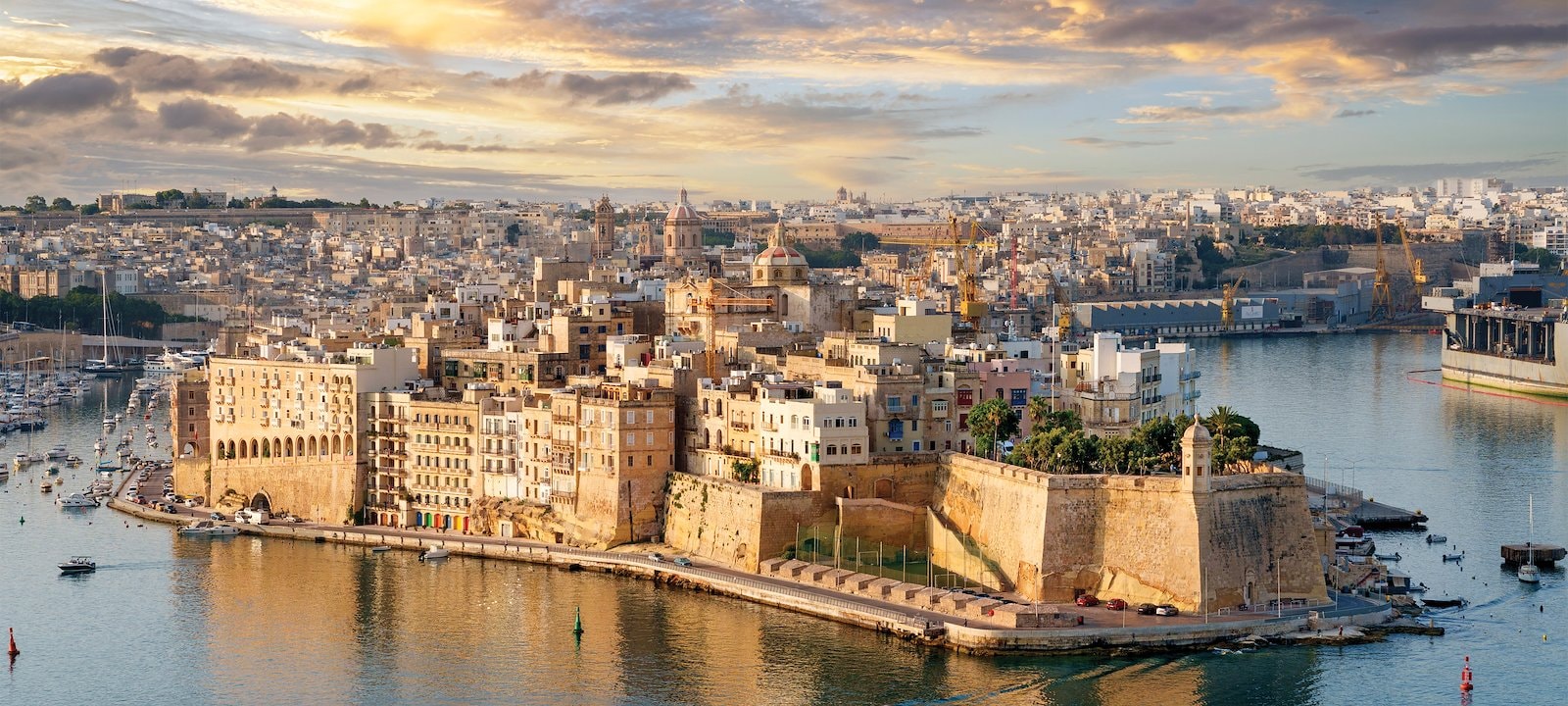
The fortified city of Valletta and the Grand Harbour.
Image credit: Susanne Kremer/AWL ImagesMalta is a Mediterranean crossroads that feels Italian, Spanish, British, and North African while maintaining its own unique language and culture. With balmy weather, wonderful food, ancient temples, and English widely spoken, it’s clear why travelers are flocking to this island nation.
Day 1: Theatrical Past
Morning:
Grab a pastizzi tal-irkotta, a delicious cheese-filled pastry, at Jeff’s Pastizzeria before a walking tour of Valletta. St. John’s Co-Cathedral is an ornate Baroque gem – all gold and colored marble – constructed from 1573–77 and home to Caravaggio’s masterpiece, The Beheading of Saint John the Baptist. Wander through more than 400 years of Maltese history at the Grand Master’s Palace. Nearby, the opulent Teatru Manoel, built in 1731 and one of Europe’s oldest working theaters, offers guided tours and has live concerts, operas, and plays. And Sacra Infermeria, a vast 16th-century hospital built by the Knights of St. John, houses a fascinating museum that details how medieval medicine was practiced.
Afternoon:
Mdina, Malta’s ancient capital, just a half-hour drive from Valletta, is filled with quiet, characterful streets. Wander the fortified city perched on a hilltop and enjoy a lavish lunch at Bacchus, a historic Maltese restaurant in a 17th-century stone building that served as gunpowder storage chambers for the old city’s defenses.
Evening:
The atmospheric streets of Birgu, on a peninsula across the Grand Harbour from Valletta, are ideal for early-evening exploration. Stroll through the Vittoriosa Yacht Marina, then visit the Inquisitor’s Palace for a look into Malta’s past. Try the traditional Maltese rabbit stew at Tal-Petut, an elegant restaurant tucked away in an alley behind the palace.

The historic St. Lucia Street Steps in Valletta.
Image credit: Susanne Kremer/4Corners ImagesDay 2: Unspoiled Coastline
Morning:
An easy hour’s drive from Valletta on Malta’s southern coast, the neighboring Mnajdra and Ħaġar Qim temples are UNESCO World Heritage sites that are older than Stonehenge and the Pyramids. Drive five minutes southeast after visiting the temples to see the Blue Grotto – a natural complex of seven sea caves famous for the deep blue waters and limestone arch. Small boat operators run tours of the luminous caves.
Afternoon:
Marsaxlokk is a traditional fishing village 6 miles from the Blue Grotto, where you can spend the afternoon walking the harbor promenade and checking out the colorful Maltese luzzu fishing boats. For lunch, try Roots, a popular seafood restaurant known for its octopus carpaccio.
Evening:
It’s a 200-step walk down to Għajn Tuffieħa, but the payoff is one of Malta’s most unspoiled beaches. In warm weather, the crystal-clear water is perfect for swimming and snorkeling, and this is the place to watch the sunset year-round. Back in Valletta, enjoy a decadent dinner at Palazzo Preca, in a 16th-century palace on Valletta’s historic Strait Street, and run by the hospitable Preca sisters, Ramona and Roberta.
Brightly painted luzzu boats at Marsaxlokk.
Image credit: John Kellerman/AlamyDay 3: Folk Roots
Morning:
Escape the main island with a scenic short ferry crossing from Valletta to Gozo’s Mġarr Harbour. Often described as Malta’s more tranquil sibling, Gozo offers a slower pace of life and plenty to see and do. Spend your morning exploring the winding, golden-stone streets of Victoria and its 17th-century Cittadella, home to the magnificent Baroque Cathedral of the Assumption, constructed between 1697 and 1711.
Afternoon:
For a glimpse of Maltese village life, visit Xagħra, which has an ornate parish church, a picturesque town square, and the Instagram-worthy Ta’ Kola Windmill. Lean into the nostalgia at the Pomskizillious Museum of Toys, and don’t miss Xerri’s Grotto, a hidden underground cave filled with natural stalactites and stalagmites beneath a family home.
Evening:
On your way back to Valletta, stop at the Mosta Rotunda, a neoclassical church modeled on Rome’s Pantheon. It has one of the world’s largest unsupported domes and survived a World War II bomb that failed to explode: a celebrated local miracle. Enjoy dinner and folk dancing on Wednesday and Friday nights at the award-winning Ta’ Marija, a local institution that has Gozo sheep’s milk ricotta ravioli, imqaret (date cake), and other Maltese specialties.