
Jonathan DeHart enjoys a spectacular journey between the richly varied cities of Tokyo and Kyoto

Sign Up for Preferred travel’s free newsletter
Vivid Storytelling and Exquisite Stays for the Passionate Traveler
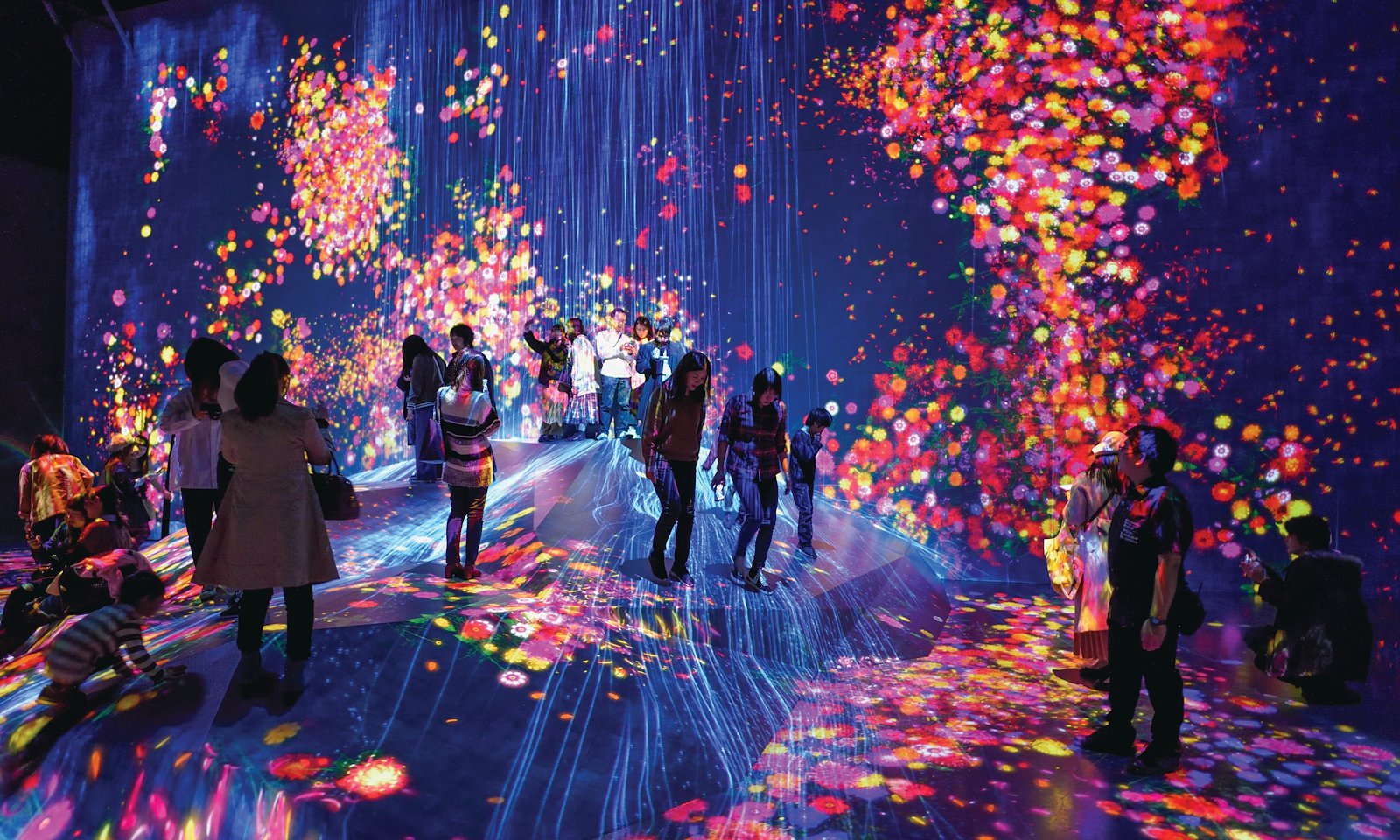
Light displays at teamLab Borderless Digital Art Museum.
Image credit: imageBROKER.com/Alamy Stock PhotoTo summarize the beautiful complexities of Japan’s most alluring cities is to attempt the impossible: each is a vast metropolis, where turning a corner can take you from centuries-old temples straight into the beating heart of modern youth culture. Between Tokyo and Kyoto, you brush against geisha, discover bustling markets of sizzling local delicacies, and enter futuristic museums that combine art with science, technology, and entertainment.
Neon Dreams in Tokyo

Bright neon lights illuminate Tokyo’s Shinjuku district.
Image credit: Christian Kober/John Warburton-Lee Photography LtdFeel the capital city’s formidable pulse at the extraordinary Shibuya Crossing. The passing minutes here are punctuated by zooming vehicles that give regular pause for the huge waves of pedestrians passing under the neon lights. Watching all of this unfold is the statue of Hachikō the Akita, now immortalized, a faithful hound who is remembered for patiently waiting at Shibuya Station each day for almost a decade, unaware his owner had died and wouldn’t return.
Beyond Hachikō’s gaze, behind neighboring Harajuku Station, sits Meiji Jingu, one of Tokyo’s most important shrines, dedicated to its namesake Emperor Meiji. The complex – best seen in the early morning, when daily food offering rites are held – is ensconced in the heart of a century-old forest. The towering oaks and camphor trees are so dense, the sounds of the city outside fade.
As wandering through this pocket of Tokyo reveals, Japan shifts between the traditional and the bleeding edge
After paying your respects at the shrine, step through its imposing torii gate near Harajuku Station. The gen Z-fashion mecca of Harajuku is one of the most youthful corners of town – it spills across the tangled backstreets and is ideal for aimless wandering, browsing trendy hyperlocal clothing shops and perhaps a quick coffee at a cat (or dog, pig, or capybara) café.
Running through the center of Harajuku, the grand boulevard of Omotesando is an approximately half-mile, zelkova-lined stretch of swanky shops that doubles as an architectural showcase. At the far end of this stylish artery, you’ll find the seemingly bubble-wrapped Prada shop, as well as the flagships of Japan’s high-fashion trinity: Issey Miyake, Rei Kawakubo’s Comme des Garçons, and Yohji Yamamoto. This dapper stretch culminates at the elegant Nezu Museum, whose standout feature is arguably its verdant stroll garden, dotted by stone lanterns and a restored teahouse.
As wandering through this pocket of Tokyo reveals, Japan shifts between the traditional and the bleeding edge, between intensity and calm, all within the space of a single neighborhood.
Harajuku is a hub of youthful fashion and eclectic shops.
Image credit: Christian Kober/John Warburton-Lee Photography LtdExplore and Dine
Board the subway at Omotesando Station, a stone’s throw from Nezu Museum, and zip across town to Azabudai Hills to find teamLab Borderless, a digital art museum, where waterfalls and vortices of light cascade through rooms of technicolor flowers, bubbles, and aquatic creatures, responding to visitors’ movements and touch. teamLab Planets, in the city’s southeast, offers a similarly interactive experience, as does teamLab Biovortex in Kyoto.
Step from a visual feast toward a culinary one – Tokyo’s restaurant kitchens claim more Michelin Stars than Paris and New York combined. The city’s famous Tsukiji fish market moved its wholesale operations to Toyosu in 2018, but the neighboring Tsukiji Outer Market remains a lively destination for visitors keen to try sushi, dumplings, meat skewers, and other typical Japanese fare.
Tokyo’s restaurant kitchens claim more Michelin Stars than Paris and New York combined
Dining in Tokyo has many faces when the sun goes down. The old geisha quarter of Kagurazaka is replete with chic wine bars, French bistros, and teppanyaki joints tucked down cobblestone lanes. For a bit more grit, head to Shinjuku. Prepare to be gobsmacked by the smoky culinary alleyway of Omoide Yokocho and Golden Gai’s maze of bohemian, pint-sized bars.
To escape the rush, head to Hakone, a hot-spring town 90 minutes southwest of Tokyo by train. Soak in an onsen (hot spring) bath, laze about in a yukata (lightweight kimono), and feast on a seasonal, multicourse kaiseki-ryori spread in your tatami-floor room.
Japan’s kochia – fluffy, fiery-red shrubs – beneath the towering peak of Mount Fuji.
Image credit: Amana Images Inc./Alamy Stock PhotoKyoto Beckons
Refreshed, board a Shinkansen (bullet train) for the roughly two-and-a-half-hour journey to Kyoto. As you travel west, take a seat on the right-hand side of the train to secure a view across the mountains to elegant Mount Fuji, which can be clearly seen on cloudless days. A fresh bento box of food from your departing station offers a chance for a mid-journey meal: some are even self-warming.
Arriving in Kyoto Station, a hulk of steel and glass, you could be forgiven for thinking you’d arrived in another megacity. A few miles east lies Fushimi Inari Taisha, which contains a trail of torii gates dedicated to Inari, the god of rice, fertility, sake, and commerce. The shrine’s path winds up a mountain, through a hypnotic tunnel of the red archways, all presided over by an army of stone foxes, known as kitsune, said to be Inari’s messengers. If you brave the path after dark, the sylvan setting takes on a subtle charge – tradition warns about fox-spirit possession via the fingernails. A more likely animal to cross your path is a wild boar, many of which call the surrounding woodland home.
A bamboo grove at Kyoto’s Adashino Nembutsu-ji Temple.
Image credit: Susanne Kremer/AWL Images Women in traditional Japanese attire in a historic Kyoto street.
Image credit: Jon Arnold Images Ltd/Alamy Stock PhotoFurther cultural depth can be found on the contemplative Philosopher’s Path, tracing a hushed residential canal lined by cherry trees
The hilly surrounds of Kyoto mean Fushimi Inari is just one option for a meandering ascent; in southern Higashiyama you can walk the atmospheric lanes of Ninenzaka and Sannenzaka, which are cobblestone underfoot, and colorfully painted, folding umbrellas hang from windows. Up top, the soaring temple of Kiyomizudera offers stellar views of Kyoto’s true scale. If it’s peace you’re after, head to the quiet backstreets around the temple of Kodai-ji. Make a pit stop at the traditional dessert café Kagizen Yoshifusa for a pastry filled with azuki red-bean paste, washed down with a delicious cup of matcha.
In the temple-rich heart of northern Higashiyama, start at the Zen bastion of Nanzen-ji. Pass through its enormous Sanmon Gate, then follow the path beside an aqueduct that runs overhead to a path into the mountains. Proceed up a stone staircase into the forest beyond to a hidden grotto where pilgrims stand under a waterfall and chant.
Further cultural depth can be found on the contemplative Philosopher’s Path, tracing a hushed residential canal lined by cherry trees. Slip into the still, mossy hideaway of Honen-in, missed by most visitors, on your way to Ginkaku-ji (“Silver Pavilion”), famed for its rambling gardens that spread across a hill.
After dusk, Kyoto takes on a dreamlike ambiance as paper lanterns flicker on and crowds thin. At Monk, chefs whip up Italian fare with local ingredients. For something classic, splurge on an immaculate kaiseki-ryori feast at Kikunoi Honten (advanced reservations essential). Then follow dinner with a stroll through Gion – keep an eye out for geisha as they flit to and from wooden machiya (townhouses) – then follow the path beside the murmuring Kamo River. Have a nightcap at one of the atmospheric watering holes along Pontocho, a cobblestone alleyway festooned with red, glowing lanterns.
Arashiyama and Osaka
The tranquil garden at Nezu Museum, Tokyo.
Image credit: Didier Zylberyng/Alamy Stock PhotoThe western district of Arashiyama reveals another side of Kyoto. Most visitors stop at the sublime gardens of Tenryu-ji and wander into one of the world’s most photographed bamboo groves. But for those in the know, this dense canopy of green is just the jumping-off point to a much quieter corner of the city.
Making the most of the dawn light, you’ll discover a hidden gem at the far side of the grove in Okochi Sanso, the true highlight of Arashiyama. Once the home of namesake actor Okochi Denjiro (1898–1962), the dreamy villa sits in mossy grounds with panoramic city views. See if you can spot a solitary temple clinging to a distant craggy peak as you gaze outward behind the villa. Continue along the road past Ogura Pond and you’ll find yourself in open countryside: rice paddies dotted by sparse residences and a sprinkling of discrete temples. A good starting point is Jojakko-ji, with more to be seen as you head north from there.
To change the pace, take an express train about one hour south from Kyoto – a mere 15 minutes by bullet train – to the friendly and refreshingly dressed-down city of Osaka for a bit of kuidaore (“eating oneself to ruin”). The easiest place to indulge is the Dotombori district in the city’s south. Just pick up some okonomiyaki (savory pancakes infused with cabbage) or takoyaki (grilled dough balls stuffed with chunks of octopus) at a street stall, then wash it down with an ice-cold beer or lemon sour as giant animatronic crabs move their arms overhead and neon lights dance on the surface of the canal. The city is known as Japan’s kitchen for good reason – treat yourself!
Winter in Hokkaido
Giant snow sculptures at Sapporo Snow Festival in Hokkaido.
Image credit: Susanne Kremer/AWL ImagesIt would be remiss not to mention the importance of seasons in Japan. Come wintertime, Hokkaido steals the show. Every February, Sapporo hosts the annual Snow Festival, where artists build intricate sculptures of ice and snow around town. The nearby town of Otaru glows for a time in February, too. During the Otaru Snow Light Path Festival, some 100,000 candles flicker from within snow lanterns dotting the town’s romantic canal district. Meanwhile, snow-sports aficionados flock to ski resorts like Niseko, Rusutsu, and Furano to enjoy what many consider to be some of the finest powder on Earth.
Go Farther: South Korea
Gentle Monster eyewear shop in Seoul’s Hongdae neighborhood.
Image credit: Bob Henry/Alamy Stock Photo Towering bookshelves in the Starfield Library in Gangnam district.
Image credit: Ian Trower/AWL ImagesSouth Korea – particularly Seoul and Jeju Island – makes a compelling add-on, with direct flights from Tokyo, Osaka, and Fukuoka, which is closer to Seoul than Tokyo.
While both nations’ pop cultures tend to rhyme, they remain distinct in key ways. In Seoul’s fashionable Gangnam district, the Starfield Library makes a statement of its own. Inside, 43-foot-tall bookcases, softly lit from within, tower over shoppers ascending and descending through COEX Mall.
Gentle Monster takes eyewear in an experimental direction, displaying it amid fantastical sculptures of black horses, giant translucent eyeballs, androids, and schoolgirl mannequins engaged in melee combat. So, what is it – art gallery or eyewear shop? You decide.
Seoul isn’t all sleek, modern lines. At the royal palace of Gyeongbokgung, red, green, and blue buildings topped by sweeping tile roofs are punctuated by vast stone courtyards, where visitors wear rented hanbok (traditional garments) in colorful pastels – all in the heart of hypermodern Seoul, set against a mountainous backdrop north of the city.
For a glimpse of South Korea’s wild side, windswept Jeju Island, just over an hour’s flight from Seoul, delivers. Off its rugged coastline of black basalt, female divers known as haenyeo in wetsuits take the plunge without oxygen tanks, then return with abalone, sea urchins, octopi, and more. The island’s dramatic landscape is dotted by volcanic craters, with the grassy cone of Seongsan Ilchulbong jutting upward right beside the sea.