
Dive into the history of one of the world’s most recognizable beers – just in time for Saint Patrick's Day

Sign Up for Preferred travel’s free newsletter
Vivid Storytelling and Exquisite Stays for the Passionate Traveler
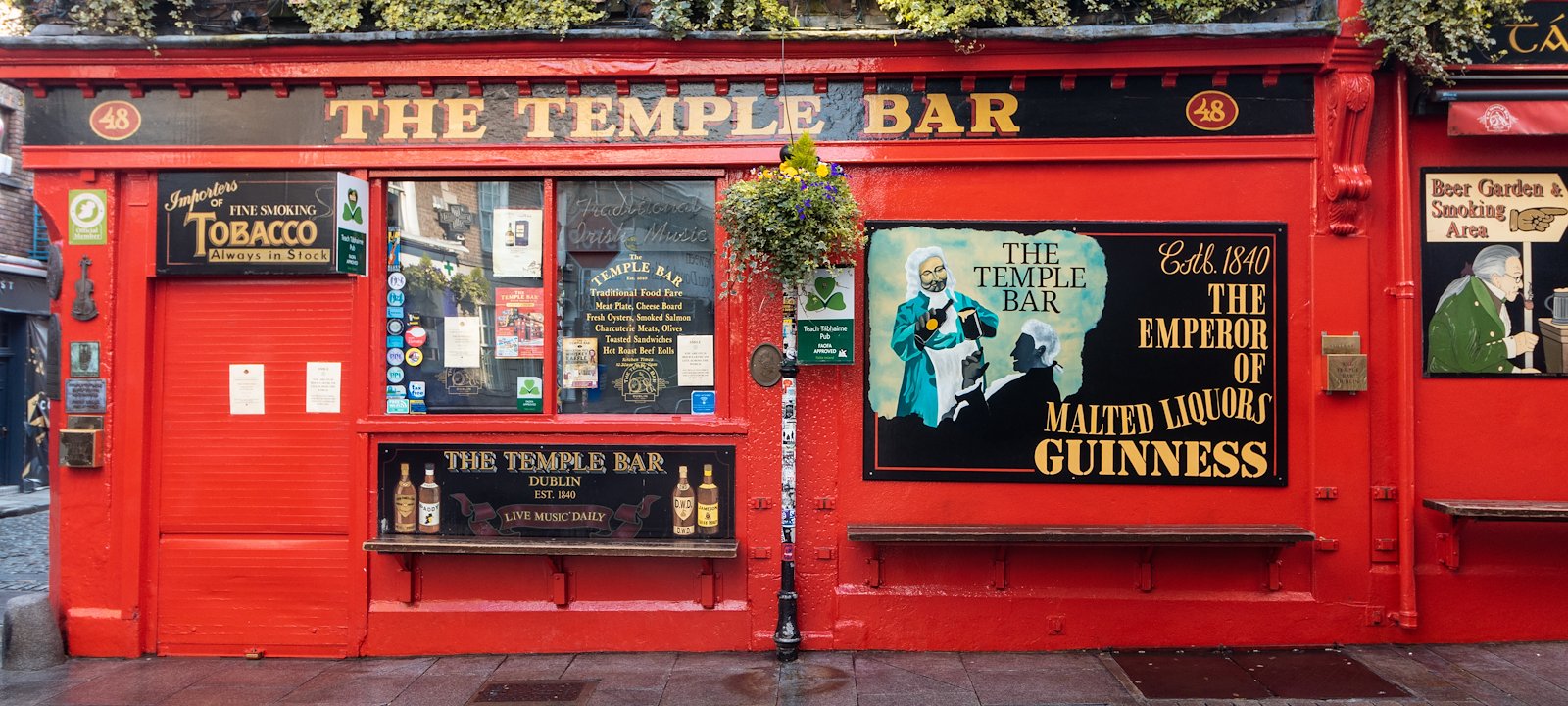
The year is 1759. The Anglo-Irish population holds a majority of power in society, concern regarding Britain’s rule over Ireland continues to grow, Dublin breweries are struggling in comparison to their English counterparts, and Arthur Guinness has just signed a 9,000-year lease on an abandoned 4-acre brewery in Dublin.
Yet despite its humble beginnings, the Guinness name grew to be much more than just a beer company - it became a dynasty that helped shape Ireland’s political and social landscape, bringing global recognition to a culture that brims with character and pride. A legacy that spanned several centuries and multiple generations, the history of Guinness is one that is as rich and complex as the drink itself.
What Exactly Is Guinness?
Believe it or not, Guinness started off brewing ale, rather than the globally recognized dark stout we all know and love today. It wasn’t until the 1770s that porter – originally conceived in London – made its way to The Emerald Isle and found a welcoming home at the Guinness Brewery. By 1799, the porter became so popular that the ale was forgone – and almost completely forgotten today. Long story short, Arthur Guinness, who was nothing short of a perfectionist, developed a stronger porter known as stout porter, which eventually became just stout, the Guinness we drink today.

Now, you may be wondering: Stout? Porter? What’s the difference?
While porters typically use malted barley, stouts incorporate unmalted barley that’s roasted to create a bolder flavor profile. They are described to have a drier, more bitter taste, whereas porters are often smoother and lighter, occasionally with a nutty or chocolate-y palate. Of course, flavors can vary globally, but essentially, stouts are the darker, more intense relative of porters.
Brewing History
As Guinness began exporting internationally (as early as 1796), it continued to blaze trails throughout the industry. Pioneers of their craft, brewers concocted a variation of the beverage that would be able to travel long distances without sacrificing quality. Even after Arthur Guinness passed in 1803 and control over the brewery was handed down to his son, Arthur Guinness II, the brilliant ingenuity remained, leading to the rapid global expansion of Guinness. Known now as Guinness Foreign Extra Stout, it made its way throughout the Caribbean, Africa, and Asia, where devout fanbases quickly formed. As a result, today Nigeria is one of the top importers of the beverage, with consumption right up there with the United Kingdom and Ireland.
Following the passing of Arthur Guinness II, the brewery was passed down to his son, Benjamin Lee Guinness, in 1855. But it wasn’t until Benjamin’s son, Edward Cecil Guinness, took over that the company really took off. By the late 19th century, with the help of Edward’s undying ambition, the Guinness brewery was the largest in the world. The company continued to introduce cutting-edge ideas, ranging from business-oriented to philanthropic. In the 1890s, a testament to the late Arthur Guinness’ meticulous care and innovation, a team of experts were sent out to sail around the world to check the quality of Guinness exports. To many, such excursions may have seemed like a lot of effort (not to mention a high risk), but this was the Guinness standard. Employee welfare was also increasingly prioritized, establishing benefits such as paid holidays, pension schemes, and free healthcare for employees and their families – all of which were revolutionary at the time. Additionally, Edward and his siblings continued to uphold their family’s legacy of philanthropy and political involvement, establishing trusts, providing homes for the poor, and donating to local organizations.
Marketing Magic
Despite global recognition, Guinness did not advertise until 1929. Aside from their iconic harp logo – which is strikingly similar to Ireland’s national emblem (the Guinness harp was actually trademarked first, in 1876, and forced the Irish Free State to settle for a mirrored version) – the company felt that there was no need for any additional marketing.
Under the creative direction of English artist John Gilroy, the company introduced its first few campaigns throughout the mid-20th century, featuring a variety of comical animal characters and clever slogans such as “My Goodness, My Guinness” and “Lovely Day for a Guinness.” The initial Guinness slogan, “Guinness Is Good for You,” came from the belief that Guinness contained medicinal healing properties. The slogans have stuck for decades, and today, Guinness advertisements are as unique and recognizable as the beer itself.
The Pour
Now that you know some of the history behind the Guinness name, it’s only fair that you know how to properly pour a Guinness. Because yes, there’s a technique behind it.
First, grab your glass, preferably a branded Guinness glass. Tilt it at 45-degrees under your tap. This helps to aim the nozzle at the harp logo on your glass (reason number one for branded glassware). Start pouring, but when it reaches the top of that golden harp, stop! You must now let the Guinness settle. Watch as that famous Guinness foam starts to rise to the top. After about 80 seconds, slowly fill up the rest of the glass, this time at an upright angle. And there you go: The perfect pint. No wonder they say good things come to those who wait.
Here’s the second reason for using branded glassware: "splitting the G." This popular tradition involves taking a large first sip from a pint of Guinness with the goal of perfectly bisecting the G in the logo. An artform that can only be mastered by ordering multiple rounds, give the challenge a try the next time you find yourself with a Guinness in hand, whether that be in Dublin or at your local Irish pub. Sláinte!