
A regular visitor to Mexico for more than 25 years, writer John Brunton never fails to fall under the spell of this exuberant, colorful, and truly mesmerizing nation

Sign Up for Preferred travel’s free newsletter
Vivid Storytelling and Exquisite Stays for the Passionate Traveler
Magical moments. I have so many unforgettable souvenirs of traveling the length and breadth of Mexico, a destination whose sheer variety of remarkable attractions never ceases to amaze. My vivid, barely glimpsed snapshots range from a joyous parade of costumed giants, brass bands, and mariachis playing in the fiesta of a dusty pueblo village surrounded by tall, spiky, blue agave plants, just outside the grand Baroque city of Guanajuato, to climbing the 365 steps to the summit of the massive Maya pyramid of Chichén-Itzá.
Then there’s watching elegant couples dancing salsa and merengue in the historic Zócalo Square of Veracruz, one of the places where Hernán Cortés and his Spanish conquistadores first set foot in New Spain, or trekking through the Yucatán’s lush jungle and emerging opposite the cascading Misol-Ha waterfall. Wandering through Oaxaca’s teeming Indian market, where patient ladies – their long hair tressed with brightly colored ribbons – expertly roll and press corn tacos in a ritual unchanged for centuries, or more recently, touring the vineyard of a magnificent colonial hacienda, just on the outskirts of the modern metropolis of Guadalajara in Jalisco, and tasting exceptional Mexican wines, now becoming as well-known internationally as tequila.

Even after regular trips over 25 years, I still immediately fall under Mexico’s seductive charm each time I return, not just because of the spectacular cultural and nature sightseeing, but for the irrepressible good humor and welcome from locals, exceptional locavore cuisine from the land that gave the world chilies, tomatoes, chocolate, vanilla, and avocados, and a crazy new discovery each visit. Take the latest trend in sophisticated Mexico City of drinking pulque – milky, fermented maguey sap, once a sacred drink of Aztec priests, that today is like sipping from a glass filled with Mexican history.
Many visitors’ trips begin by flying into Mexico City, and the nation’s fascinating, pulsating capital has so much to see and do that it is a destination in its own right. Away from the capital, I advise friends to embark first on an almost spiritual journey into the soul of Mexico by tracking down the wondrous ruined cities, temples, and pyramids of the highly cultured Indigenous civilizations that flourished for centuries in pre-Hispanic times: Aztec, Maya, Olmec, and Zapotec.
Even after regular trips over 25 years, I still immediately fall under Mexico’s seductive charm each time I return
Iconic Historical Sites
Nothing quite compares to when first-time travelers arrive in the Yucatán Peninsula and come face to face with the immense monuments of the enlightened Maya people: the soaring Pyramid of the Magician at Uxmal, Tulum’s dramatic ruins overlooking the azure waters of the Caribbean, and the ancient Chichén-Itzá with its Great Ball Court. These are the unmissable sites on every travel itinerary. I always arrive in the first hazy light of early morning, long before the crowds, to soak up a mystical dreamlike atmosphere.
Mexico changed irrevocably when the Spanish arrived 500 years ago, defeated the Aztecs of
Emperor Moctezuma, and set about creating a glorious colony, New Spain. They built fabulous Baroque palaces and mansions, noble piazzas lined with grand arcades, and, above all, churches, monasteries, and cathedrals, each one more sumptuous and ornate. The incredibly preserved heritage that remains today, a glittering necklace of resplendent cities stretching across the whole country, many recognized as UNESCO World Heritage Sites, are guaranteed to take your breath away.
I always arrive in the first hazy light of early morning to soak up a mystical dreamlike atmosphere
I once planned a whole trip around Mexico devoted to these unique cities, which are exquisite illustrations of European Baroque architecture, but crafted by Indigenous artisans to create a distinct Mexican style. Search out the remarkably elaborate façade of Oaxaca’s Santo Domingo church, and look carefully to identify tiny animi creatures and symbols subtly introduced by the 16th-century masons, while even the Capilla del Rosario in Puebla, a masterpiece of flamboyant Baroque style, features mystical native geometric designs and patterns.
Each of these colonial settlements, be it Querétaro, Guadalajara, San Miguel de Allende, or Morelia, have their own charm and unique attractions, but these are still vibrant, living cities today. A palatial mansion is now a chic boutique hotel with an art gallery or craft boutiques; an ornate inner courtyard is transformed into a gourmet restaurant, the tables set out under shady arcades along the zocalo; while a central food market – maybe designed by Gustave Eiffel, as in Guanajuato – pulses with life as live chickens and turkeys are traded, and enticing aromas waft in the air from bubbling cauldrons of chocolate mole sauce or smoky chicken, beef, and jalapeño peppers grilling over red-hot charcoal.
Spectacular Natural Surroundings
Between archaeological ruins and Baroque cities, it is easy to forget that Mexico also boasts a panoply of unspoilt landscapes, from jungle to desert, beaches to wild volcanoes and mountains.
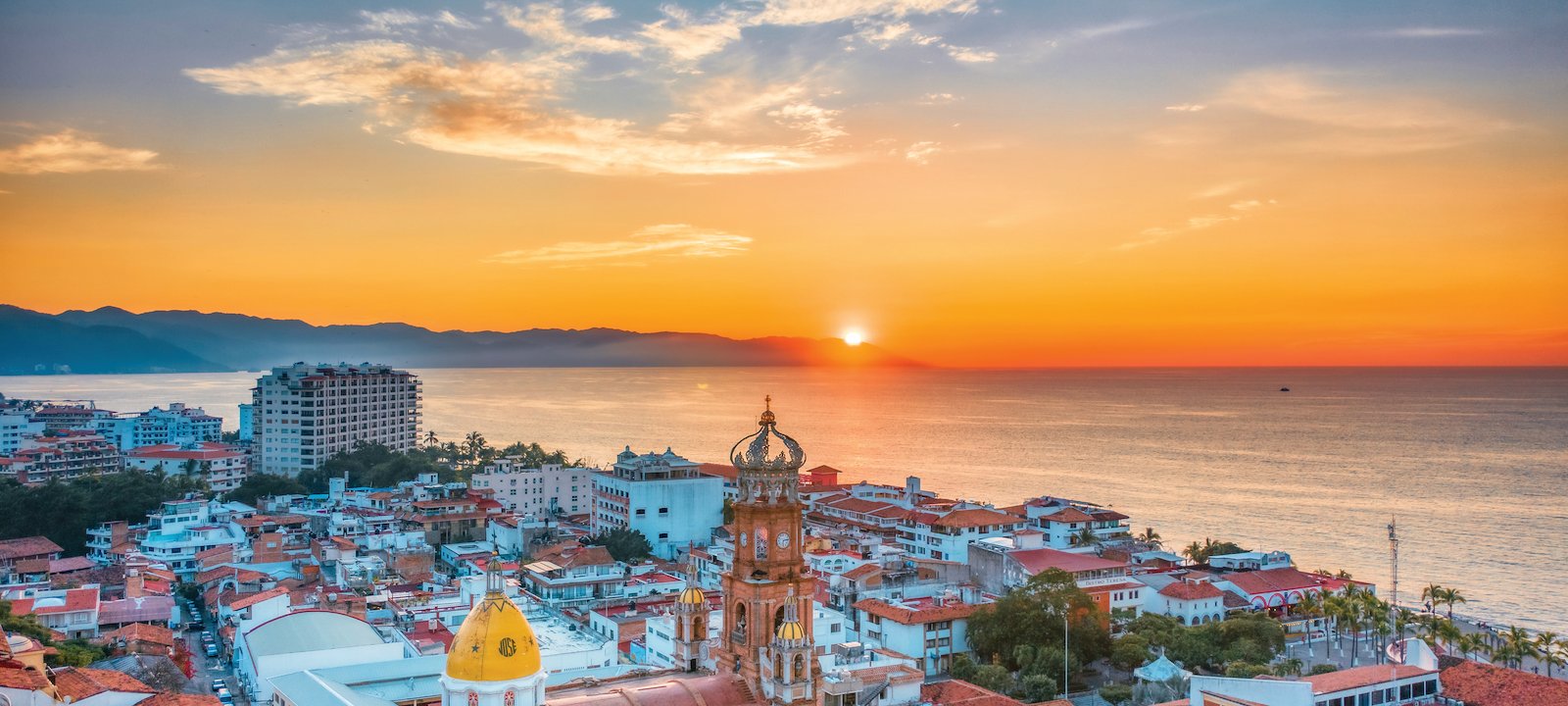
Much of Mexico’s extensive coastline is marked by some of the world’s most famous beach resorts, from Cancún on the Riviera Maya over to Jalisco’s Puerto Vallarta or up to Los Cabos in Baja California. A favorite beach destination is on the Pacific Ocean in the state of Guerrero. For years, the sleepy fishing village of Zihuatanejo was the local insider secret for a weekend getaway from Mexico City, just an hour’s flight away. Then, a nearby coconut-fringed beach was slowly transformed into Ixtapa, a paradise resort playground of luxury hotels, golf courses, and watersports.
Traditional Mexican Fare
As someone who travels the world writing about food and wine, I have always been seduced by the complexity of Mexican cuisine, an insider’s culinary secret that is a whole world away from the global image of fast-food nachos and cheese, tostadas, and giant torta sandwiches. While the street-food scene is dazzling here, what fascinates me is that each region of Mexico has its own specialties and traditions.
From Puebla, try chiles en nogada, poblano chilies stuffed with meat and fruit and smothered in a creamy walnut and pomegranate sauce; a tangy sopa di lima, lime soup from the Yucatán; freshly caught red snapper, huachinango, baked in olives and capers from Veracruz; and steamed Oaxaca tamales, banana leaves filled with spicy mole negro sauce and shredded pork.
Fortunately, you can find gourmet restaurants in all major cities offering visitors gastronomic tasting menus to discover many of these unique dishes. What’s more, the meals are paired with excellent wines grown in local vineyards, made by a new generation of Mexican winemakers. Don’t be surprised if the sommelier suggests a chilled Chardonnay from Baja, Syrah and Merlot grown in Guanajuato, and elegant Pinot Noir from high-altitude vineyards in Querétaro. To end on a traditional Mexican note, instead of ordering either cognac or armagnac, try one of the new small-batch, single-village mezcals being distilled now, like the wonderfully named Burro Loco, the “Crazy Donkey.” You won’t be disappointed.